
The stage is set for an epic volleyball spectacle as the 2025 FIVB Men’s Volleyball World Championship descends upon the vibrant shores of the Philippines. From September 12-28, the Smart Araneta Coliseum and the SM Mall of Asia Arena in Manila will pulsate with the energy of 32 national teams, each vying for the coveted world title in this new, biennial era of elite international volleyball.
This edition marks a significant shift in tournament structure, presenting a formidable challenge to all contenders. The 32 teams are divided into eight pools of four, with only the top two from each group advancing to the demanding elimination rounds. As the competition draws near, the spotlight sharpens on Pool E, a fascinating blend of established European powerhouses and an intriguing South American resurgence. Here, Slovenia, Germany, Bulgaria, and Chile are poised for a strategic showdown, where every serve, block, and spike will count.
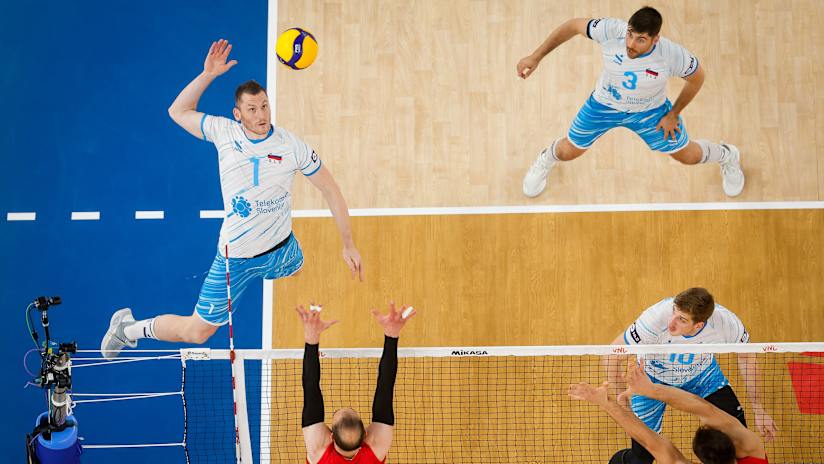
Opposite Tonček Štern will be one of Slovenia`s weapons to come out on top in the pool.
Pool E: The Contenders and Their Ambitions
Pool E promises a compelling narrative of veteran strength, youthful exuberance, and a remarkable comeback. Let’s dissect the strategic positions of each team.
Slovenia: The Consistent Threat
Slovenia arrives in the Philippines with a well-earned reputation as a consistent force on the international scene. Their qualification for the World Championship stemmed from a silver medal finish at the 2023 European Championship, underscoring their top-tier status. This marks only their third appearance in the event, yet their previous outings saw them climb to an impressive fourth place in 2022, following a 12th place debut in 2018. The trajectory is undeniably upwards.
Ranked 7th globally by FIVB, the Slovenians are now under the guidance of Italian coach Fabio Soli. While the absence of their promising young outside hitter Rok Možič due to a knee injury is a notable setback, the core of their experienced squad remains formidable. Setter Gregor Ropret orchestrates the offense with precision, feeding powerful opposite Tonček Štern. Flanking them are the seasoned outside hitters Klemen Čebulj and Tine Urnaut, alongside the robust middle blocker Jan Kozamernik. Their collective experience and tactical discipline make them strong contenders to top the group, even with a key player sidelined. It’s a testament to their depth and strategic adaptability.
Germany: The Resurgent Giants
Germany secured their place in the World Championship through their strong FIVB World Ranking, a fitting testament to their enduring presence in the sport. Their history in the tournament is rich, with 12 previous appearances dating back to 1956, highlighted by a memorable gold medal in 1970 and a bronze in 2014. These are not merely historical footnotes; they serve as a reminder of German volleyball’s potential.
Currently ranked 8th in the world, the German squad enters their fourth season under the astute leadership of former Polish star Michał Winiarski. Following a strategic decision to rest or limit key players during the Volleyball Nations League, Germany is expected to unleash their full arsenal in the Philippines. The veteran opposite György Grozer, known for his explosive power and clutch performances, will undoubtedly be a focal point. Supported by formidable middle blockers Anton Brehme and Tobias Krick, and the orchestrating hands of setter Jan Zimmermann, this German team possesses both the experience and the firepower to make a deep run. Their quiet VNL performance might just be the calm before the storm.
Bulgaria: The Legacy Keepers with New Blood
Bulgaria, the third European contingent in Pool E, also qualified via their FIVB World Ranking, affirming their place among the world`s elite. Their historical footprint in the World Championship is particularly profound, boasting five medals from ten appearances, including a bronze in the inaugural 1949 event and another silver in 1970. This rich heritage certainly casts a long shadow, but the current team is focused on writing its own chapter.
Ranked 15th globally, the Bulgarians are led by second-year Italian head coach Gianlorenzo Blengini. The team`s strategy is increasingly centered around the burgeoning talent of the Nikolov brothers: Aleksandar, a dynamic outside hitter, and Simeon, a promising setter. Their youthful energy is complemented by the consistent contributions of outside hitter Martin Atanasov and middle blocker Aleks Grozdanov. Bulgaria represents a fascinating blend of historical weight and a vibrant new generation, aiming to rekindle their medal-winning traditions. Their performance will be a crucial indicator of the rising stars of European volleyball.
Chile: The Long-Awaited Return
Chile`s qualification for the World Championship is a story of perseverance and a remarkable return to the global stage. Earning their spot through the FIVB World Ranking, this marks their first appearance in 43 years, with their sole previous participation being in 1982 where they finished 23rd. For a country with a developing volleyball infrastructure, this is an achievement worth celebrating.
Positioned at 27th in the FIVB World Ranking, the Chilean squad has been under the consistent leadership of Argentine head coach Daniel Nejamkin since 2011 – a rare feat of longevity in international sports. On the court, their game plan heavily relies on the formidable outside hitter duo of captain Dusan Bonacic and Vicente Parraguirre, whose offensive prowess will be critical. Veteran middle blocker Tomás Gago provides crucial experience at the net, while Matías Banda typically steers the offense as their main setter. Chile enters as the underdog, with the least historical success in this pool, but their motivation to prove themselves after such a long absence will be immense. They have little to lose and everything to gain, making them a potential spoiler in a group dominated by European expectations.
The Gauntlet Ahead: Pool E Match Schedule
The path through Pool E is clear, and the schedule offers some tantalizing matchups:
- September 13: Germany vs. Bulgaria (17:30 local), Slovenia vs. Chile (21:00 local)
- September 15: Germany vs. Chile (13:30 local), Slovenia vs. Bulgaria (17:30 local)
- September 17: Bulgaria vs. Chile (13:30 local), Slovenia vs. Germany (21:00 local)
Conclusion: Who Will Conquer Pool E?
Pool E presents a fascinating microcosm of the 2025 Men`s World Championship. Slovenia, with their consistent top-four aspirations, face a challenge in maintaining their upward trajectory without a key player. Germany, returning to full strength, carries the weight of past glories and the expectation of a deep run. Bulgaria brings a blend of storied history and exciting young talent, eager to make their mark. And then there`s Chile, the triumphant returnee, ready to defy expectations and shake up the established order.
The matches in Manila will be more than just games; they will be strategic battles, tactical masterclasses, and displays of raw athletic power. With only two tickets to the elimination rounds available, the pressure is immense. Who will execute under pressure? Which tactical gambles will pay off? Pool E is not just a group of teams; it`s a testament to the evolving landscape of international volleyball, where history meets ambition and every point is a step closer to glory.